
When Sarah Gilbert and her husband decided to foster, she thought she knew what to expect.
“My parents were group home parents,” Sarah explained. “I grew up in an approximation to foster care. I was very familiar with the system, and it’s something that I had always wanted to do.”
Sarah and her husband, Charlie, already had three biological sons but felt they still had the capacity for foster care.
“We only wanted to foster one child at first because we already have three boys, and one of them is special needs,” she said. “I knew what we were getting into having lived in group homes, and I knew my bandwidth for what I could watch over in my house.”
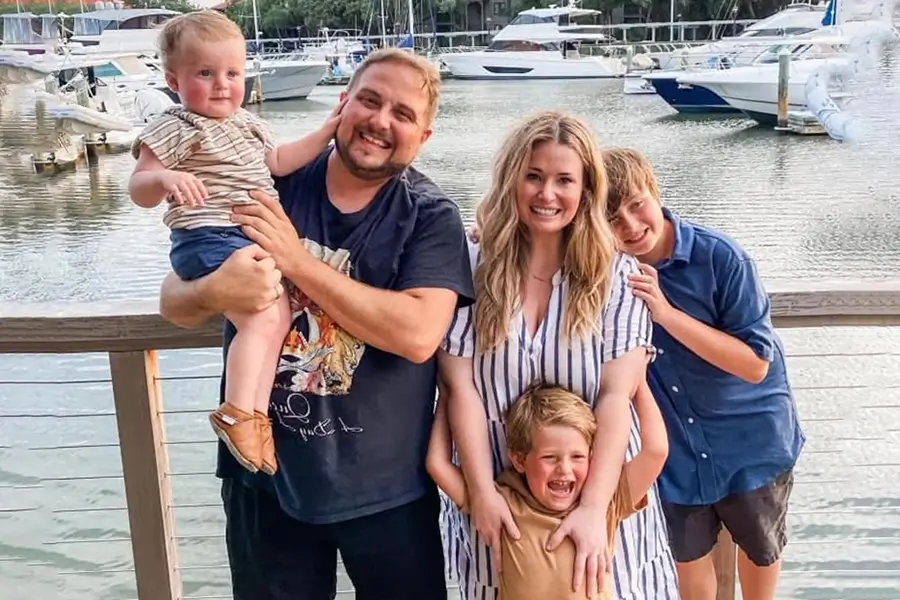
When the Gilberts approached The Georgia Division of Family & Children Services (DFCS) about fostering, they were met with discouraging hesitation because the family did not feel able to take teenage placements or sibling groups, a big need in the Georgia foster care system.
“I have a heart for teens. It’s just not something that with our family unit, as it is right now, we were prepared to take on, so I thought, ‘Maybe I should just stop trying.’”
Sarah and Charlie decided to instead turn to a private agency. Licensing delays and poor communication with this agency led to continued doubts and roadblocks.
But the Gilberts still felt God wanted them to open their home. They decided to try one more agency.
“Charlie knew somebody connected with Families 4 Families. We contacted them and started the process, and it was completely different. It was night and day onboarding with Families 4 Families!”
As Sarah communicated her family’s needs and capacity, the response was different than in the past. “I never felt like there was anything but support and understanding for the decisions that were best for our family,” she said.
After approval and licensing, the Gilberts received their first placement, a precious baby boy. At first, Sarah believed he was malnourished but otherwise medically stable.
“Once we had him, I could definitely tell there were some things going on that had me very concerned, and I’ve just been discovering he’s incredibly medically fragile,” she said.
In the midst of the baby’s health crisis and the toll of keeping up with feedings, Families 4 Families stepped in.
“Our caseworker came and sat with him twice to give me a break, and then the director of the region came and sat too,” she shared.
Due to the baby’s medical fragility, Sarah knew she would need to take him to multiple appointments every week. As a working mom of four, she wasn’t sure how she would manage.
“Nothing has gone as expected or planned, and if we hadn’t gone through [Families 4 Families], I don’t know how we would be staying afloat right now,” Sarah said. “I think we probably would’ve had to disrupt [end foster care placement], which would’ve broken my heart because we absolutely adore and love our placement.”
Whether it’s bringing a meal or diapers and wipes or giving Sarah time to rest at the hospital, Families 4 Families’ support has been a lifeline for the Gilberts amidst the unexpected chaos.
“Those kinds of things make such a big difference when you are struggling and feel alone and don’t feel like anybody sees you or your situation,” she said.
As the Gilberts settle into a new normal for their family, Sarah is grateful for the growing foster care community in her area as Families 4 Families continues to license families and expand their services.
To people in her community and across Georgia who want to help, she welcomes it!
“When you are at your max capacity and struggling and feel like everything is really hard, having encouragement is so important for foster families,” Sarah explained. “So many foster families quit because they are exhausted and feel like they don’t have support and that no one sees them or cares. We lose a lot of really good foster homes because they’re burned out.”
She knows other foster parents struggle like she does with asking for help and receiving it, but when everyone sees a need and takes a step to solve it, children can find help and healing.
“It’s all about putting yourself in proximity to the need,” she said. “We work out of a place of convenience and what’s comfortable to us. But we need to put ourselves in a place where we see the need, seek the needs out and actually take the action to say, ‘I want to walk beside you.’”